Distinctive Brand Assets That Survive Channel Proliferation
Brands need consistent visual and sonic cues to survive fragmentation.
AI-generated creative has made polished visuals cheap and basically infinite, so competent design no longer sets a brand apart from its competitors. The real fight in 2026 is over recognition, not aesthetics, and that's a much harder fight to win.
Channel proliferation didn't happen by accident. It happened because brands are now run by committees that never meet. A freelancer picks a font weight that feels right to them. The deck designer goes corporate because decks are serious business. The ad agency runs punchier copy because punchy converts. Five vendors, five interpretations of the same brand, and not one of them is wrong, exactly. They're just five different people guessing at the same target, and they never compare notes.
The direction this is accelerating in makes the problem worse, not better. Leading brands in 2026 aren't picking their favorite channel and focusing there. They run connected, multi-sensory experiences across physical, digital, and environmental touchpoints all at once. That means more plates spinning, and more places for the brand to show up looking slightly, unrecognizably off. Every new touchpoint is another place where the logo can get stretched, the color can drift half a shade, the tone can wander from "trusted advisor" to "guy yelling at a trade show."
More creative output is landing in front of more people than ever, yet brand differentiation is getting harder to hold onto, not easier. Flooding a feed with competent content used to be an advantage. Now it's table stakes, because everyone's doing it with the same AI tools and roughly the same results. The brands pulling ahead are the ones whose specific cues, visual, sonic, verbal, get recognized before anyone stops to think about it. That kind of recognition is a memory structure, built over time, that channel proliferation puts under constant pressure.
What makes a brand asset distinctive
A distinctive brand asset does one job: it triggers recall before anyone consciously clocks what brand they're looking at. The campaign can be forgotten entirely and the brand still sticks, because the asset did the remembering on the audience's behalf.
Three categories carry that weight: visual, verbal, and sonic. Visual covers logos, color, typography, mascots, and recurring shapes, the "see it and know it's us" signals. Verbal covers taglines, slogans, and the particular voice a brand uses, so its sentences sound like nobody else's. Sonic covers jingles, audio logos, and soundscapes, the category sound travels through faster than sight does, which makes it the most underused of the three.
Now for the uncomfortable part. When you score B2B brands across eight asset types (logo, visual device, tagline, face, sound, color, typography, and product motif) color comes out on top almost every time, with the vast majority of companies performing well on it. That sounds like good news until you notice the trap: if every brand in a category has mastered color, the colors cancel each other out. If a category is full of distinct blues, it's still, functionally, a category of blues. Nobody's winning the recognition game by being slightly more teal than the competition.
Globally, only a small slice of tested brand assets qualify as distinctive. Most companies are pouring budget into the asset class everyone already does fine on (color, logo polish) and starving the asset classes that would actually make them memorable. That's a portfolio allocation problem, fixable the moment someone decides to look at it honestly.
Repeated consistently across touchpoints, it built what researchers call processing fluency, the mental shortcut where seeing a familiar shape makes something feel easier to recognize and trust. Buyers now connect that deer to Trackdesk the same automatic way people connect a gecko to car insurance or a puppy to toilet paper. None of those are the most beautifully designed mascots on earth. They just showed up enough times, in enough places, looking exactly the same each time. Consistency did the heavy lifting that a better-drawn deer never could have.
Auditing what you have before deciding what to build
Before anyone commissions a new logo refresh or a snappy new tagline, the smarter move is figuring out which assets already on the shelf are actually doing cognitive work, and which ones are just sitting there looking nice. Most organizations have never run that test, so most brand budgets get spent partly blind.
A real audit tracks which assets show up the same way across every channel, and which ones quietly morph depending on which team, vendor, or platform touched them last. It also tracks something more expensive than it sounds: how often employees recreate an asset from scratch because nobody can locate the approved version. IDC research puts a measurable annual cost on exactly that behavior across U.S. enterprises, making the scattered-folder habit a measurable line item.
The audit also has to check for repetition. An asset needs enough repeated exposure to build a memory structure at all, so if it gets refreshed or replaced too often, it never gets the chance. Add to that a scan for the gaps: which asset classes are missing entirely from the portfolio. Sonic identity is usually the biggest blank spot, a brand with a great logo and zero sound signature is only half-dressed for 2026.
Fragmentation risk peaks at the handoff points, the moment an asset passes from an internal creative lead to an outside vendor, or from a global team down to a regional one. If no one governed system holds the line, brand files end up scattered across cloud drives, random desktops, and email attachments nobody can search. Scattered files turn off-brand use from a risk into a near-certainty, a structural problem rather than a careless-employee one.
A finished audit should produce exactly two lists. One: the assets worth defending and running more often, because they're already doing the work. Two: the assets that are decorative or redundant and can be retired, with the goal being concentration, not accumulation. Hoarding assets doesn't build recognition any more than hoarding ingredients makes a better meal.
The deeper mistake most companies make is confusing the campaign for the brand. They pour resources into launches and product moments, then wonder why none of it feels connected to what came before. The fix runs the other direction: build and verify the brand system first, and the campaigns that follow get faster to produce and more consistent by default, because the system is doing the consistency work instead of each campaign reinventing it.
Building assets that hold their shape when they leave your control
A distinctive asset earns its keep when it stays recognizable in situations its own designers never planned for. That takes redundancy built into the design rather than a rulebook trying to lock everything down.
Three design qualities make the difference. First, distinctiveness from the category, not just from one named rival. An asset that mirrors the visual house style of its whole industry will get absorbed into the wallpaper, no matter how sharp it looks in isolation. Second, simplicity at the core. The assets that travel best across every channel, a shape, a sound, a short phrase, are the ones that still read clearly even when reduced to their barest form. Added detail adds fragility. Third, multi-sensory anchoring wherever it's possible: an asset that hits sight and sound and touch builds a sturdier memory than one relying on sight alone.
Physical channels matter here more than a lot of brand teams want to admit. Screen fatigue is real enough that brands are reinvesting in direct mail, retail spaces, live events, and trade shows, formats that feel more human and more trustworthy precisely because they're not another browser tab. An asset built to only work on a screen is an asset that's already incomplete, because it has no plan for the half of the brand's audience standing in a booth aisle holding a printed flyer.
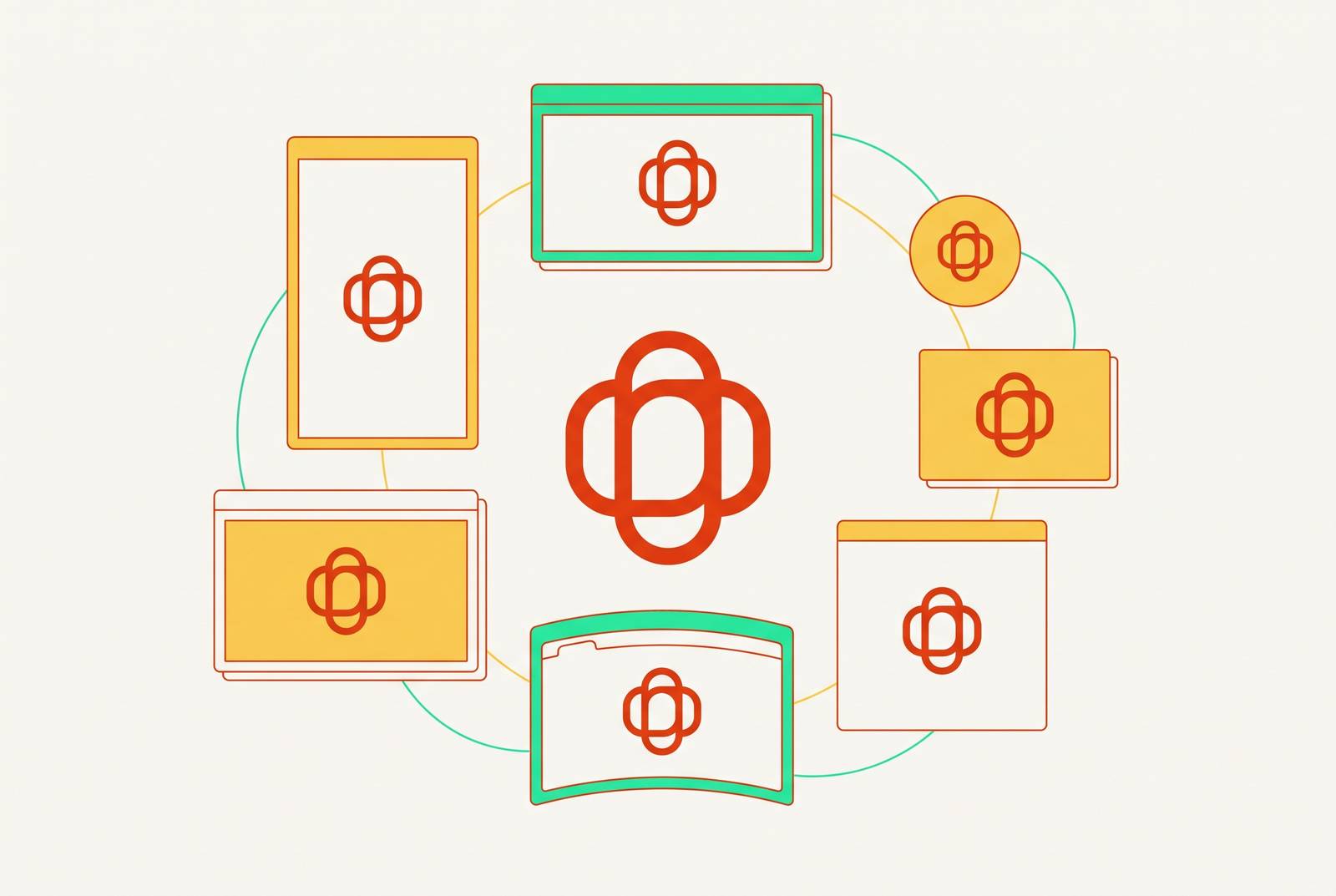
The actual test is simple to state and hard to pass: does the asset hold its shape at a trade show booth, in a TikTok ad, in an AI-generated content feed, and in a printed mailer, and is it recognizable in each without requiring the viewer to already know the brand? Most assets fail at least one of those checkpoints.
Why verbal and sonic brand assets are consistently underdeveloped
Most brand systems get built by people staring at mood boards. The entire system ends up weighted toward what can be seen. Voice and sound get left to whoever has five minutes at the end of the project, and that imbalance is exactly where the easiest competitive ground sits unclaimed.
Verbal identity does real work on platforms where visuals get suppressed or simply don't matter: email subject lines, AI-generated search summaries, Reddit threads, long newsletters nobody is scrolling past images in. A brand with a flat, generic voice is invisible in every one of those formats, no matter how good its logo looks elsewhere. Voice also carries weight inside the AI search environment specifically: brands that show up in the community sources feeding AI Overviews get a direct benefit from having a voice people actually recognize when it appears in those conversations. A brand that sounds like a form letter doesn't get remembered in a Reddit thread. A brand with an actual personality does.
Sonic identity is the more neglected cousin, and arguably the highest-leverage fix available to most portfolios. Netflix's "ta-dum," Intel's chime, and McDonald's "I'm Lovin' It" sonic logo all prove the same point from different angles: sound alone can drive recall in situations where a visual asset simply has no way to compete, audio-first media, background listening, a phone in someone's pocket. Podcasts, video ads with the sound on, retail store playlists, and voice interfaces are all growing categories, and a brand without any sonic signature is, in every one of those spaces, functionally mute.
What consistency at scale requires operationally
Well-designed assets are only half the job. The other half is operational, determining whether any of the design work from earlier survives contact with a real organization. The most carefully built asset drifts the moment it leaves the creative team's hands, unless something is actively holding the line on how it gets used.
Without a governing system, agencies, partners, and internal teams end up working from whatever version of a file they happen to have open. Brand assets scatter across cloud drives, desktops, and email threads, so outdated logos or slightly-wrong color palettes keep circulating because nobody has the authority to pull them out of circulation. Scale without a system doesn't produce more brand, it produces more dilution, because every team facing a gap fills it with whatever's nearest at hand rather than what's correct.
A functioning system has three parts. One: a single, authoritative source for approved assets, not a shared folder everyone has access to and nobody maintains, but a governed library with real version control and access permissions attached. Three: templating that lets non-creative team members produce on-brand materials without routing every single output back through the creative department for sign-off.
The cost of skipping all three isn't abstract. IDC research puts a real, measurable annual cost on U.S. enterprises for the time employees spend searching for or recreating brand assets that should have been one click away. Every team pays that operational tax by default when no system exists to collect it differently. The creative work from earlier sections, the mascot, the sound, the voice, is the investment. The operational system is the only thing standing between that investment and a slow leak, one nobody notices until the brand looks like five brands wearing the same name tag.
Sources
- How to Create Distinctive Brand Assets That Stand Out in 2026
- The Brand Experience Economy in 2026: Why Touchpoints Matter More Than Ever - Graphic Village
- Retailers look beyond social feeds for brand storytelling in 2026
- Brand Asset Trends to Watch (2026 & Beyond)
- B2B growth needs distinctive brand assets, not just performance