Brand Strategy Framework for B2B SaaS Companies
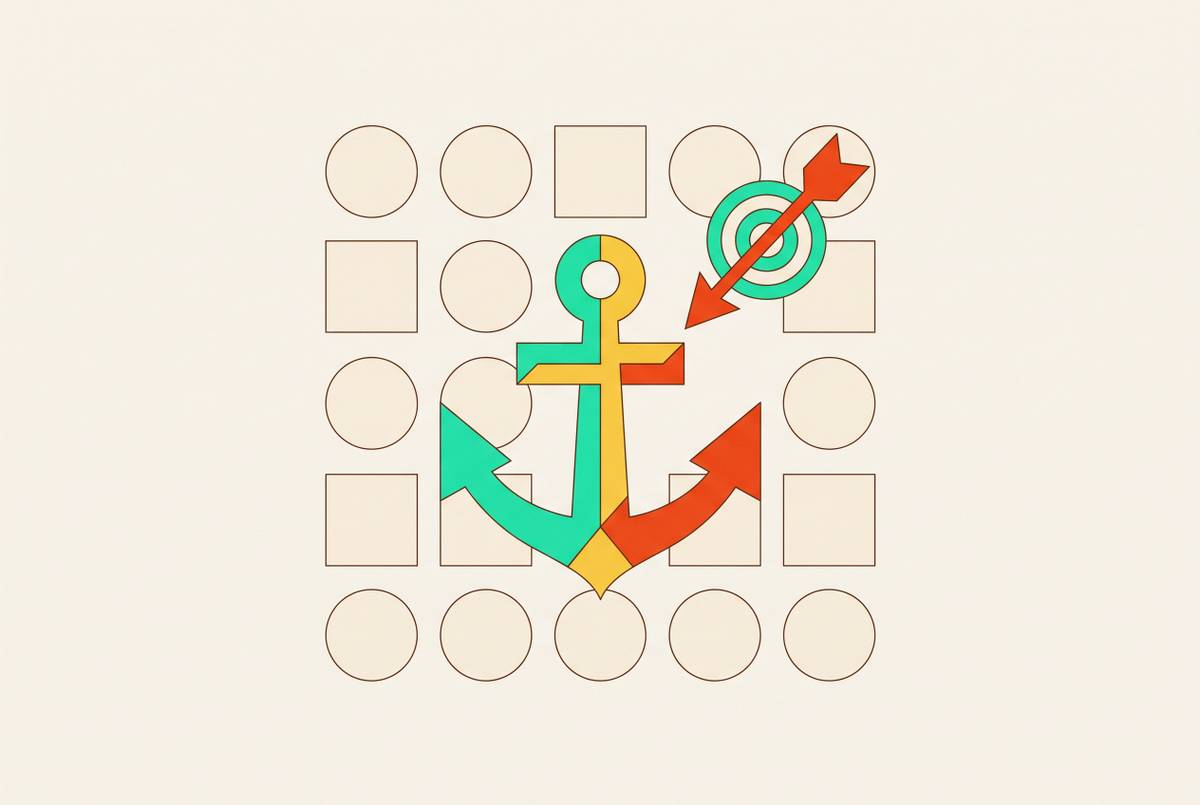
Four layers connect B2B SaaS brand strategy to revenue.

Brand strategy for B2B SaaS gets built backwards almost every time. This piece covers the four layers that actually connect a brand to revenue (identity, positioning, visual execution, pipeline proof) in that specific order, because skipping one is how you end up with a rebrand nobody can defend to the board. That question, "what did the rebrand do for the quarter," comes up more often now, and there's a reason for that.
Forrester's 2024 B2B Marketing Survey found 62% of B2B marketing leaders now face pressure to tie brand spend to revenue within 12 months. Boards stopped asking about awareness lifts a while back; they want sourced pipeline, full stop. Gartner's 2024 CMO Spend Survey put marketing budgets at 7.7% of company revenue, the lowest reading in that survey's history. Less money, more scrutiny, worse odds if your story isn't tight. And Forrester's 2024 B2B Buying Study clocked average enterprise software buying cycles past 11 months, with buying groups running north of 10 stakeholders. A brand that has one good week in Q1 doesn't do much against a committee that's still meeting in October. It has to hold up in month seven, in a room you weren't invited to, in front of someone who's never heard of you.
Brand strategy that doesn't connect to pipeline is decoration with a project plan stapled to it. I've said this in enough client meetings that I should probably get it embroidered on something.
What a brand strategy framework actually contains — and what most SaaS teams get wrong
Ask ten SaaS marketing teams what "brand" means and eight will describe a launch campaign, or a logo tweak. Brand and campaign aren't the same thing, and confusing them is exactly how a company ends up with a sharp landing page in March and a completely different one-pager by June. Nobody planned that; it just happens when there's no shared foundation underneath.
The fix, on paper, is simple: build the system first, run campaigns off it second. Actually doing this in an org where three people report to three different VPs is another matter entirely. A real framework stacks four layers:
- Identity. Who you are, what you believe, why you're not vendor number twelve on the RFP.
- Positioning. Where you compete and who you're competing for, said the way your buyer actually talks, not the way your product team writes Jira tickets.
- Visual and verbal execution. Fonts, colors, templates, tone. The stuff that carries identity and positioning into an ad, a deck, an email footer.
- Pipeline connection. Proof any of it mattered.
Each layer leans on the one below it. Jump straight to execution, which is what most teams do because execution is the part you can point to in a meeting, and you get a logo with no reason to exist. I'd guess half the "our brand feels inconsistent" complaints I've sat through trace back to a missing foundation, not a font choice. Maybe more than half, honestly.
Here's the budgeting shift worth making: campaigns depreciate, brand systems appreciate. That LinkedIn ad from 2023 is doing nothing for you right now, today, this quarter. The brand book behind it gets reused and sharpened for years, and it gets cheaper to activate every time, since nobody's reinventing the visual language for the fourth campaign of the quarter.
Building the identity layer: mission, values, and the narrative that earns buyer trust
Identity sits deeper than a tagline, deeper than the shiny thing most people picture when someone says "brand" in a meeting. It's the set of convictions that decide how your company behaves when nobody's grading the performance: a support ticket, a sales call nobody's recording, a job posting that reveals more than it means to.
For B2B SaaS, identity needs to answer three questions clearly enough that a new hire could repeat them back after week one. What problem was this company actually built to solve? Why has that problem gone unsolved this long? And what does the company believe about the buyer that competitors either don't believe, or just haven't said out loud yet?
Narrative carries more weight the longer the sales cycle runs. With 11 months and 10-plus stakeholders per deal on average, your story has to survive contact with people your sales rep will never meet. There's no human in the room to explain it away when the fourth stakeholder finally reads the deck in month nine.
In practice, this layer produces a few concrete things. A company narrative document (an actual story, with a before, a villain, a resolution) written the way you'd explain the company to a smart friend at a bar, not the way you'd write an About Us page nobody reads. Three to five brand values that describe testable behavior instead of aspirational wallpaper. "We value transparency" means nothing until someone can point at a moment and say "yes, that's it" or "no, that's not it." A tone-of-voice guide built from the hard conversations, a churn email, a price increase notice, not just the easy stuff lifted from a product launch blog post.
The failure mode is almost universal, and I've watched it happen at companies that should've known better. Identity work happens at a leadership offsite, gets nodded at, lands in a slide deck, and dies there. It never reaches the designer building next week's deck, or the CS rep writing a renewal email at 6pm on a Friday. Identity that lives exclusively in a Google Slides file three executives opened once isn't identity anymore, just a PDF nobody reads twice.
Positioning for B2B SaaS: owning a defensible wedge instead of creating a new category
The "invent a brand-new category" playbook that ran wild in B2B SaaS from roughly 2018 to 2022 is getting quietly retired. Starr Conspiracy's 2025 B2B branding agency trends brief notes boards have gone cold on 18-month category-creation bets. Fair enough: sales cycles are longer, win rates are tighter, and "trust us, buyers will eventually learn this category exists" is a rough pitch to defend against a shrinking budget.
The replacement is category sharpening. Instead of teaching buyers a category they've never heard of, you take one they already recognize and claim a specific, defensible slice of it. Less flag-planting on new land, more being the sharpest knife in a drawer everyone already owns.
A defensible wedge needs three things a wishful one doesn't have. Precision about the exact job the buyer hires your product to do, better than any alternative, including the alternative of doing nothing at all. An anchor to an outcome the buyer feels in their own metrics, not a feature spec nobody outside engineering cares about. And a gut check: would your best customer use these exact words if you handed them a whiteboard marker and asked them to describe their own problem?
A security company I worked with had been selling "faster threat detection." True claim, boring claim, since every competitor on the floor says the same thing at the same conference. They repositioned around "audit-ready in 48 hours, not three weeks," aimed at compliance teams staring down fines north of $2 million, instead of security teams who just wanted more speed. Same product, sharper wedge, and ACV went up 40%, because the new pitch attached to a line item that was already budgeted and already painful, not a nice-to-have buried in next year's wishlist.
A positioning statement that works follows a plain structure: for this buyer, facing this problem, we deliver this outcome, unlike these alternatives. Fill those blanks honestly and you've got something usable. And you'll know positioning is actually finished, not when marketing signs off on the deck, but the day a salesperson uses the language unprompted, on a live call, without glancing at notes.
Translating positioning into a visual and verbal system that travels across channels
Positioning stuck in a strategy doc does nothing until it gets translated into a system that an in-house designer, a contractor, or a new hire's first nervous Canva attempt can pick up and use correctly, without calling you first to ask which blue.
Four pieces make that system function. Visual identity (logo, color palette, typography, iconography) with a documented reason each piece exists, tied to positioning, not "we liked it in the mood board." A component library with reusable templates for ads, social, sales decks, one-pagers, landing pages, since these are exactly the surfaces where consistency survives contact with reality or falls apart by campaign three. Messaging architecture that locks in headline formulas, a value proposition hierarchy, and proof point categories, so copy stays on-message no matter who's typing that week. Application rules: dark background versus light, print versus digital, brand voice versus product voice, so nobody has to guess from scratch every single time.
This is the layer where B2B SaaS brands quietly fall apart. The visual identity gets real love, and then the component library never gets built because it feels like a "later" problem. Every new campaign starts from a blank Figma file, which is the design equivalent of rebuilding your kitchen every time you want to cook dinner: exhausting, expensive, and completely unnecessary.
Think of the system as creative infrastructure instead of a style guide. Build it properly and a lean two-person team, or an outside partner who's never met your CEO, can ship on-brand work without you hovering over every file. The 2025 B2B SaaS campaigns that land are the ones showing up everywhere at once: content, social, email, webinars, paid. That kind of reach only happens fast and clean when the system was already sitting there, waiting to be used.
What it costs to build or rebuild this system, and where most SaaS companies underinvest
Money talk, because pretending brand work is priceless helps nobody. craftandroot.com splits B2B SaaS rebrand costs into roughly three tiers, and the gap between the bottom and top is wider than most founders expect.
Freelancer route: under $25,000. Fine for a logo refresh, but it usually lacks the strategic depth and design-systems rigor a full brand build needs. Boutique studio route: $50,000 to $150,000, which fits most Series A through C companies, with a senior team hands-on across strategy and execution. Full-service agency route: $150,000 to $500,000 or more, and at that price you're paying for scale and process as much as talent.
Here's the cost nobody puts in the deck: another 12 months of the same tired brand, slower sales cycles, candidates turning down offers because the pitch deck looked dated in the interview, a team quietly embarrassed by the thing they're supposed to be proud of. It's a real cost, just an invisible one, buried in line items that never get labeled "brand" anywhere on the P&L.
Building in-house has its own math, and the math isn't gentle. A small creative team (one Creative Director, two UI/UX designers, a graphic designer, a copywriter) runs about $465,000 in salary alone, before benefits, before software licenses, before laptops or a corner of an office nobody's using. Benefits and payroll taxes tack on another 20% to 30%, and you're not hiring this team next week either. Plan on 60 to 120 days from job post to start date, before anyone's ramped up and actually useful.
The real question is what this brand needs to do, and what the least fragile path there looks like. High-growth SaaS companies put 10% to 15%-plus of revenue into marketing, and the brand system is the infrastructure that makes every dollar of that spend stretch further. Skip it, and you're paying full price to reinvent the wheel on every campaign, forever, which is its own kind of expensive.
How creative leadership — not just creative output — determines whether the framework holds
Brand systems don't maintain themselves, and I wish I could tell you otherwise. Someone has to own the standard, and without that person, the system erodes one exception at a time: a rushed asset here, an off-brief campaign there, a "just this once" logo stretch that somehow becomes the new normal by Q3. Each one's a small withdrawal from an account nobody's watching.
Hiring a full-time Creative Director is the obvious fix, and a real one, just expensive and slow. A senior in-house designer alone runs $116,000 to $185,000 a year, and a CD sits above that number. Add roughly 68 days just to hire someone before they walk in the door on day one. The strategic work a CD actually does, setting direction, making the calls, protecting the system from a thousand small compromises, doesn't need 40 hours a week to get done well. Which means you end up paying full-time rates for what's really part-time judgment.
Fractional creative direction fills that gap. A fractional creative director is a senior creative person embedded part-time: sitting in on leadership meetings, setting brand strategy, actually directing output. That's a different arrangement than a freelancer picking up one-off projects between other clients on a Tuesday. Typical setup runs 10 to 20 hours a week, spread across two to four clients, over six to twelve months. A fraction of full-time cost, no hiring delay, no ramp-up eating into month one.
The distinction from a freelancer matters more than it sounds like it should. A fractional CD owns the brand standard and mentors whoever's producing the actual work day to day, embedded in your team's decisions instead of waiting around for a brief to land in their inbox.
For most SaaS teams before Series B, pairing a fractional creative director with a managed creative team gets you the strategic continuity of a full-time hire without the headcount or the six-month runway. It's not a perfect substitute, nothing part-time ever fully is, but it's close enough that the gap rarely shows up in the work.
Connecting brand investment to pipeline: the metrics that make creative defensible
That Forrester number from the top is the whole ballgame: 62% of B2B marketing leaders need to tie brand spend to revenue within a year. Miss that connection and the budget doesn't survive the next planning cycle, no matter how good the work looks in a portfolio review.
Start with LTV:CAC. Healthy sits at 3:1 or better, and falling below that means one of two problems: either positioning isn't capturing enough value from the deals you win, or you're spending too much acquiring the wrong accounts in the first place. Both are brand problems wearing a media budget as a disguise.
From there, build a metrics stack across the funnel. At the top, brand signals: share of voice inside your category, branded search volume over time, content engagement quality (time on page and return visits from accounts matching your ICP, not traffic for traffic's sake, which is a vanity number dressed up as a real one). In the middle, brand influence: does brand-aware pipeline close faster than pipeline that isn't? Are more people inside the buying group actually engaging, or is it the same lone champion doing all the work again? What does win rate look like segment by segment? At the bottom, direct attribution: pipeline sourced from brand-led campaigns, expansion revenue from accounts with heavy brand engagement in their first 90 days as customers.
The single most useful move in reporting is splitting pipeline into two cohorts, brand-aware and brand-unaware, and comparing close rate and cycle length between them. That comparison is the cleanest internal proof of brand ROI I've found in fifteen years of trying to make this case to skeptical finance people, and it tends to quiet a boardroom faster than any deck full of screenshots ever will.
Some creative work won't trace cleanly to a pipeline number, and that's fine — not a flaw to fix. Brand has lag built into it the same way planting a tree does; you don't get shade in week one, and nobody expects you to. That work still needs a budget line treating it like infrastructure, the way you'd budget product design, rather than discretionary spend that gets cut the second the quarter looks rough.
You'll know the framework is holding when creative and revenue pull the same dashboard without being asked to, and not a moment before.