Design as a Service for SaaS Companies
Ongoing design partnerships beat one-off projects and stretched teams.
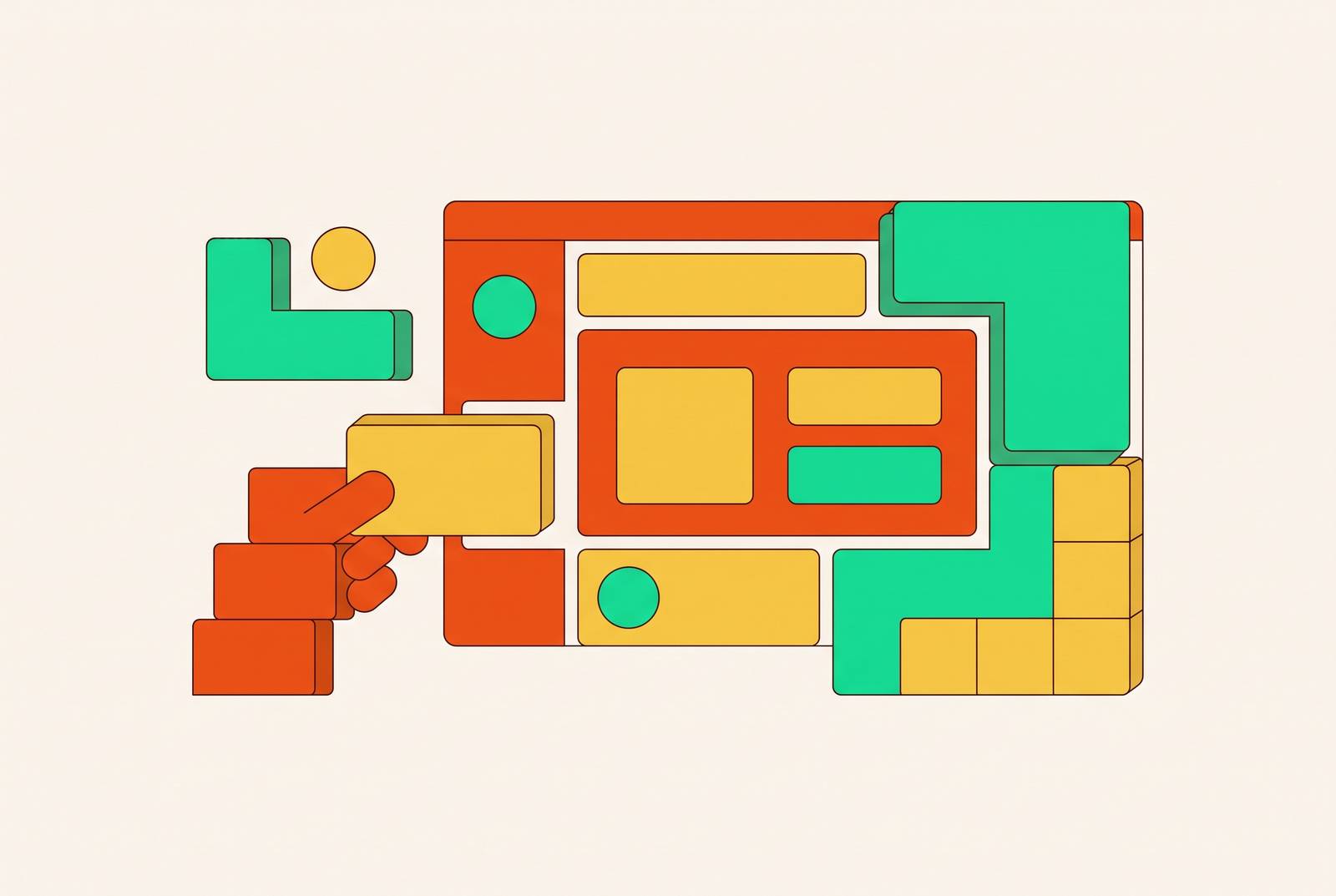
A SaaS website is the sales engine, the product demo, the onboarding ramp, and the brand story, all running on the same set of pages at the same time. That means a font choice or a confusing nav bar is a revenue issue, measured in dollars, not vibes.
A stranger decides to trust a company at the site, before they have touched the product. Credibility gets built or lost at the marketing site, long before anyone sees the actual dashboard. Every step in the free-to-paid journey, the email signup, the trial start, the card number typed in at 11pm, starts on that same website.
None of this is a one-and-done job, either. Positioning shifts, new features ship, pricing pages get tested against each other like rival gladiators, and onboarding flows get rebuilt as the product changes shape. A SaaS website is less like a painting hung on the wall and more like a living room that three roommates keep rearranging. And when the onboarding experience is clunky, people do not just grumble. They churn, and they file support tickets on the way out, both of which show up as real numbers in the spreadsheet nobody enjoys opening.
What SaaS buyers expect from a website
SaaS buyers show up with a mental checklist, whether they could recite it or not. Missing one item on that list makes the risk meter in their head tick up just enough to make them close the tab.
That checklist includes immediate clarity on what the product does and who it is built for. It includes honest, visible pricing instead of a "contact sales" wall hiding something embarrassing. It includes an interactive demo or product tour, something that lets a visitor poke around before committing real time to learning a new tool. And it includes social proof: logos, case studies, testimonials, the digital equivalent of a friend vouching for the restaurant before you walk in.
A lot of that judgment happens visually, and it happens fast. That is less time than it takes to blink twice, and it is enough time to decide whether a product looks credible or looks like it was built in a weekend and never touched again.
Enterprise buyers raise the stakes further. When a sales team, a marketing site, a product UI, and a sales deck all look and sound like they came from different companies, that inconsistency becomes a talking point in procurement conversations, and not a flattering one. The SaaS sites that clear this bar tend to share the same bones: benefit-driven messaging instead of feature soup, navigation that does not require a map, mobile-responsive layouts, a product preview or demo front and center, clear calls to action, and proof points placed above the fold where people actually look. The space between that bar and what a stretched, under-resourced design function can actually produce is exactly where growth stalls out. Closing that gap is the whole job description for Design as a Service, which gets its proper introduction a few sections from now.
Why standard design staffing fails SaaS teams
Companies try to solve this with three staffing models: hire someone full-time, cobble together a bench of freelancers, or hire an agency for a project. Each one comes with a built-in failure mode, and none of them are failures of talent. They are failures of fit.
A full-time hire sounds simple until the clock starts running. Meanwhile the roadmap does not pause to wait for a signed offer letter, and the website that needed updating in March is still waiting in June.
Freelancers solve speed but require someone to manage briefs, revisions, and the translation between designer and developer. Someone, usually a founder or a marketing lead with fourteen other things to do, has to write every brief, chase every revision, and play translator between a designer and a developer who have never spoken and share no sense of accountability to each other. Without a system to manage all of this, the "cheaper" freelancer route quietly racks up hidden costs in time and risk that erase the savings on paper.
Project-based agencies fix the quality inconsistency and bring their own trap: scope creep. And when the project wraps, the team disappears with it. The website stays. The next update means starting the briefing process over again, from a cold start, like explaining your coffee order to a new barista every single morning.
Design as a Service and How It Differs From the Alternatives
Design as a Service is a subscription: one flat monthly rate buys ongoing access to design capacity across brand, marketing, and web work, instead of a one-off project that starts cold and ends abruptly. The relationship persists. The context persists with it.
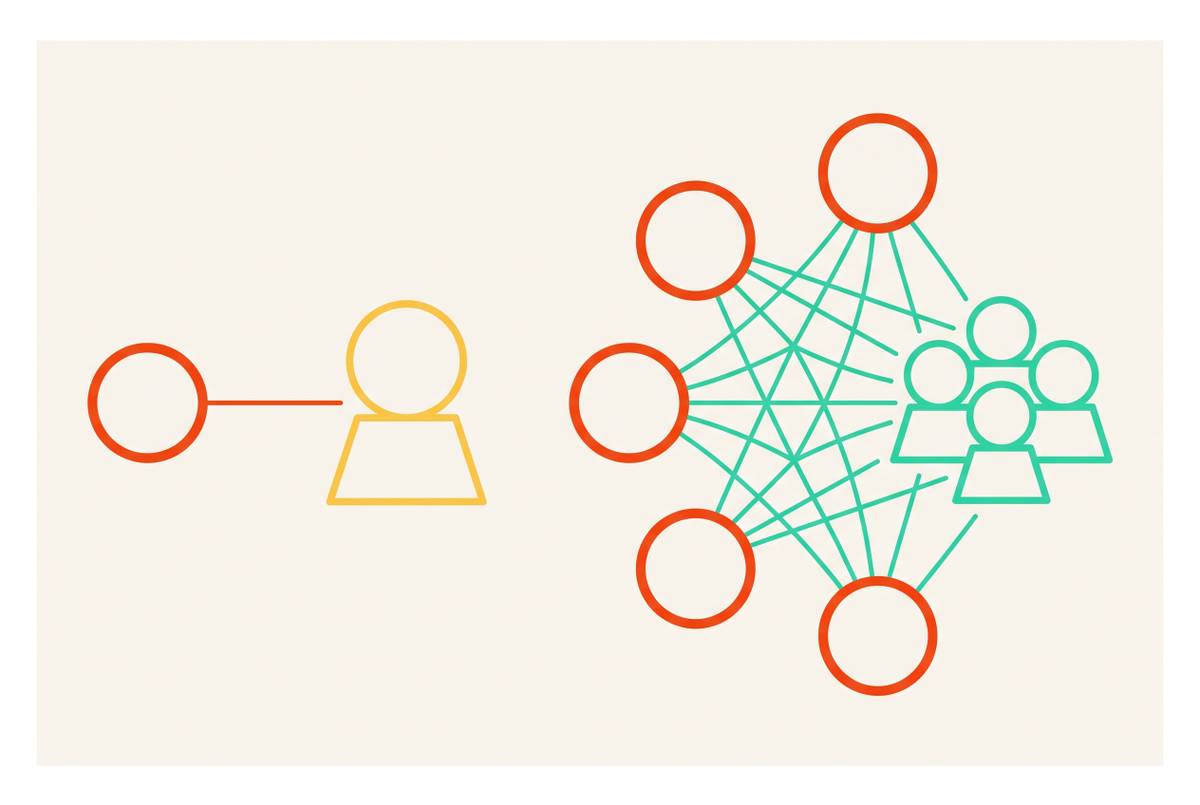
Against a project agency, the structural difference is continuity. A DaaS team keeps working from the same brand system and the same accumulated context, so the next request does not require a re-briefing from zero the way a new agency engagement would.
Against a freelancer roster, the difference is unified accountability. One service, one monthly rate, one point of contact, instead of three separate contracts and three separate visual opinions about what the logo should look like this quarter.
Against a full-time hire, a subscription team brings more breadth and faster start times. A subscription team typically brings a senior designer, creative direction, and project management in one package, work can start within days instead of after weeks of interviews, and the monthly cost is fixed and known in advance rather than tied to salary, benefits, and severance risk.
The flat rate is not just a budgeting convenience. It changes the incentive structure. A team billing by the project has a built-in nudge to pad scope. A team billing flat monthly has no such nudge, because the invoice does not change whether the request is big or small. That alignment, the provider's interest matching the client's interest, is the quiet engine that makes the whole model work.
How fractional creative leadership changes subscription design delivery
A subscription that only cranks out assets on request is a vending machine with better branding. A subscription that delivers actual business outcomes has a senior creative making decisions from day one.
That role is usually called a Fractional Creative Director, and the job is to set the visual and verbal system, decide how positioning shows up across every touchpoint, hold the line on quality, and make the senior calls that would otherwise land on a founder's desk at 9pm. Unlike a contractor hired for one project, a fractional CD stays engaged over time, carrying context forward the same way a longtime employee would, which is the actual mechanism behind brand consistency. Consistency happens because one person owns the standard and applies it every time, whether anyone is watching or not.
This answers the sharpest objection to subscription design: that rotating designers erode institutional memory. Dedicated-designer structures and fractional CD ownership solve that directly, because the context lives with the senior leader of the account, not inside the head of whichever junior designer happens to be assigned that week.
It helps to split the work into two separate questions. One is direction: what should the brand actually say? The other is production: who makes the assets that say it? The fractional CD owns direction. The subscription team owns production. The founder gets to go back to running the company, which was presumably the plan all along.
None of this needs to stay abstract or trust-based. Movement in MQL-to-SQL conversion rate attributable to creative work, changes in click-through rate and cost-per-click on paid channels, on-time delivery for campaigns, consistency of the brand across every touchpoint, and how much usable material gets produced for the sales team to actually use all appear in the numbers.
DaaS fit, stage by stage
DaaS fits a specific window, and that window happens to cover most companies from pre-launch through early growth. That is the stage where there is more creative work than a founder can personally direct, not enough volume to justify a full executive hire, and a real need for consistency that a rotating freelancer bench cannot reliably deliver.
Pre-Series A, a founder trying to approve every design decision personally is a bottleneck with a nice office. DaaS removes that bottleneck without requiring the company to make a senior full-time hire it cannot yet justify.
Series A to Series B tends to call for a hybrid. One senior in-house designer or design lead owns brand direction on a daily basis, paired with a subscription service that handles production volume. That split keeps the direction function and the execution function cleanly separated, instead of asking one overworked person to do both.
Series B and beyond changes the math. DaaS can still serve a purpose there, covering campaign spikes or overflow work, but it stops being the main engine at that scale. A company sitting comfortably past Series B reading this should not feel dismissed. The calculation is simply different at that size, and the honest answer is that a full team earns its keep once volume justifies it.
A project-based agency still has its place too, specifically for bounded engagements with a clear deliverable and no need for ongoing context: a one-time brand identity overhaul before a subscription relationship even begins, or a discrete technical build with a defined finish line.
The tell that DaaS is the right move right now is simple to spot: creative requests sit in a queue, the founder is still the one writing briefs, deliverables look like they came from five different companies, and nobody owns the quality bar.
How design systems scale subscription output without scaling hours
A design system is the infrastructure that lets a senior-led subscription team put out more work as a company grows, without needing proportionally more hours to do it. It is the shared library, the components, the color rules, the typography, the interaction patterns, that both designers and developers pull from instead of re-deciding the same questions every single time.
For a SaaS company, this appears at every layer of the business. Marketing site updates, feature announcements, onboarding changes, and ad creative all draw from the same visual language, so consistency becomes a structural feature of the system rather than something that depends on one person remembering the brand guidelines correctly every single time.
The productivity gain is not theoretical. The system did not slow anyone down or box anyone in. It handed over decisions that had already been made, so time went toward the actual problem instead of toward reinventing a dropdown menu.
For a subscription relationship specifically, the design system doubles as institutional memory. A new request comes in, and the system already carries the context forward, so the team is not starting from a blank page every time marketing needs a new landing page by Thursday. Subscription teams that embed directly with product teams, building dashboards, onboarding flows, and the design system itself in parallel, see returns that compound. Each new asset makes the next one faster to build and more consistent with everything that came before it.
What Good Creative Delivery Looks Like
A product launch is where a design team that understands the business becomes impossible to distinguish from one that just takes orders. Good delivery has a recognizable shape, and any team paying for creative work should know that shape before signing a contract, not after.
It starts before a single pixel gets pushed. A senior creative reviews the brief, flags where the intended message and the visual system are fighting each other, and gets alignment on what the launch is actually trying to do, conversion target, audience, channel mix, before any design work begins.
Timelines matter because a delay in design is a delay in revenue, full stop on the logic even if not on the sentence. A launch that slips two weeks because assets were not ready is a workflow failure, and it costs real money either way.
That setup takes the founder or marketing lead out of the day-to-day operational loop entirely, which is the whole point of paying for this in the first place.
After launch, five signals say whether the creative actually did its job: lift in branded search, growth in direct and branded traffic, earned media value, movement in NPS and brand sentiment, and changes in sales win rate and deal velocity.
How to measure whether creative investment is working
Design earns its keep the same way any other business function does: with numbers that move in a direction someone can point to. Founders and marketing leads need a shared vocabulary for holding any creative partner accountable, including a subscription service, and that vocabulary starts with the metrics already on the table.
MQL-to-SQL conversion rate is the clearest line from creative quality to pipeline health. If a redesigned landing page or a sharper pitch deck is working, more of the leads coming in should turn into qualified conversations, not just more leads overall.
On-time delivery is a metric in its own right, not just an operational nicety. A creative partner that consistently misses launch windows is costing the business real revenue, as covered in the section above, so delivery timing belongs on the scorecard next to the prettier metrics.
Post-launch, branded-search lift, traffic growth, earned media value, NPS movement, and sales win-rate changes round out the picture.
None of these numbers prove anything in isolation. Together, they turn "the design looks great" from an opinion into a business case, which is the only version of that sentence a finance team will ever actually believe.