How to Audit Your Startup Brand for Consistency Gaps
Consistency gaps are costing your startup millions in lost revenue and customer trust.
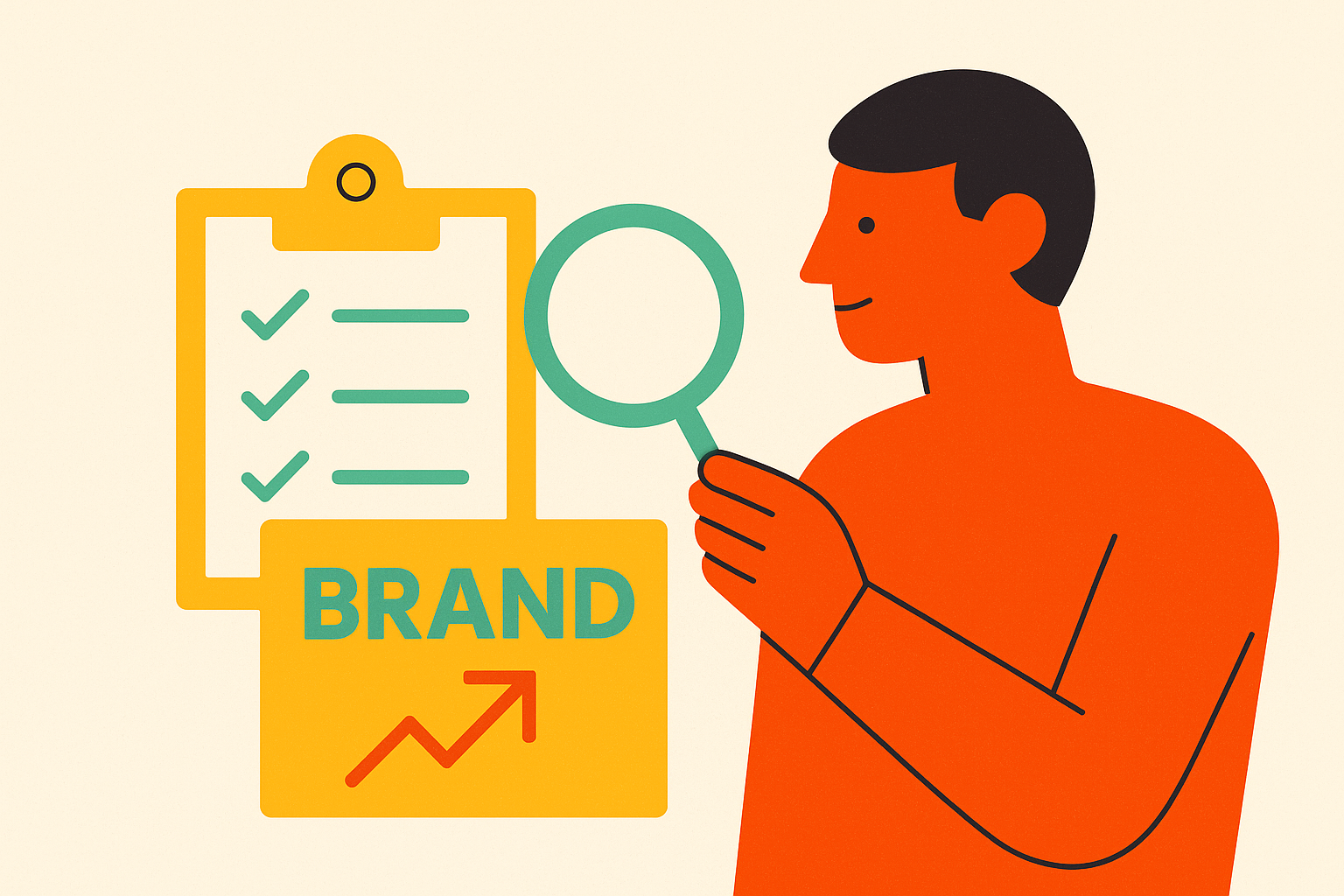
Brand inconsistency gets treated like a font problem, but the math says otherwise. Consistent brand presentation lifts revenue by 10 to 33%, according to Lucidpress and Marq's State of Brand Consistency Report (two studies rolled into one, plus a survey of over 600 brand management people). Run that range against a $50 million company and you get $11.5 to $16.5 million just sitting there, unclaimed. That's the kind of number that earns its own slide in a board deck.
Why does this happen? Inconsistency wears down trust, and trust is what actually gets deals signed. The Edelman Trust Barometer found 71% of global consumers treat trust in a brand as a buy-or-boycott call, no middle setting. PwC found 32% of customers walk after a single bad experience, and one moment where the brand sounds like it was written by a committee that's never met is more than enough to set that off.
Startups have a scale problem most founders don't notice until it's already a mess. A brand today shows up across a sprawling range of customer-facing surfaces: ads, email, social, sales decks, support chat, product docs, and it keeps going from there. Every one of those is a door somebody can walk through without checking whether the house behind it matches the one next door. Rarely is there one person actually checking.
Want proof with teeth? Look at Jaguar's 2024 rebrand. The company walked away from decades of heritage marks chasing something shinier. By 2025, European sales had dropped 97.5% year-over-year, and a brand practically vanished from a continent overnight. That's the extreme case, sure, but it's just the loud version of an ordinary failure: cut loose from consistency without a credible standard to replace it, and customers stop recognizing you as the thing they trusted.
In practice, the root cause tends to repeat itself, almost to the point of being boring: contributors scattered across the org chart, and no senior person actually enforcing a standard. That's the whole story. It's also the reason the audit process below exists at all.
What a brand consistency audit actually examines
A brand audit is a comparison exercise. You hold every customer-facing output up against a defined standard and check where it breaks.
Four layers get checked, every time. Positioning clarity asks whether the core value proposition holds steady no matter who's saying it. Messaging consistency asks whether every channel and every person is making the same claims. Visual identity strength asks whether the logo, color, type, and imagery get applied correctly wherever they show up. Voice and tone coherence asks whether the writing sounds consistent across the company, rather than like five freelancers who've never spoken to each other.
Those four layers get checked across three domains: internal branding (decks, onboarding docs, the Slack message that somehow got pasted into a client email), external branding (website, ads, social, packaging), and customer experience (support tickets, email sequences, the copy sitting inside your own product).
Startups struggle here for a structural reason, not a talent one. Multiple people touch the brand, and each filters it through their own taste: designers, freelancers, founders, the salesperson who built her own slide deck because the official one felt slow. Research shows 95% of companies have brand guidelines sitting on a drive somewhere, yet only a quarter to a third actually enforce those guidelines day to day. Meanwhile, A large majority of companies — 81% — report real trouble with off-brand content slipping through anyway, and that only gets worse as the team spreads out and leans more on freelancers.
The output of an audit is a prioritized list of gaps, ranked by damage. Positioning gaps come first, always, since everything downstream depends on that foundation holding.
Step one — auditing positioning clarity
Positioning is the foundation. Trace almost any other inconsistency back far enough and you land here.
Try this test this afternoon. Pull up the homepage headline, open the sales deck to slide one, then ask three people on your team, separately, to describe the company in one sentence. Three different answers means positioning is broken at the source, and no amount of font-matching downstream will patch that hole.
Sit with a few questions. Is the customer's core problem named the same way everywhere, or does marketing call it one thing while sales calls it another? Is the differentiator actually said out loud on the primary touchpoints, or just implied and hoped for? Could a new hire describe the positioning correctly after 48 hours on the job, without someone pulling them aside to correct it?
A gap here calls for a decision from leadership, not a copy edit, and it has to get fixed first; messaging, visual identity, and voice work built on shaky positioning will drift right back to where it started, every time.
Step two — auditing messaging consistency across channels
Messaging is positioning translated into specific claims. It drifts fastest of the four layers, mostly because someone's writing something new this week, and nobody's checking it against last week's version.
Pull five pieces of customer-facing content made in the last 90 days. Line them up, then ask whether they lead with the same core benefit and name the same customer problem. Check for contradictions on pricing, use case, or who the product's actually for.
A few cross-channel checks worth running: the homepage headline against the sales deck's opening slide against the latest email campaign, these should read like three angles on one claim, not three pitches for three different products. Social captions against the product landing page, where tone can shift but the substance underneath shouldn't. Outbound sales messaging against inbound content, because when these two don't match, the mismatch shows up right at the hand-off, exactly when a prospect is deciding whether to trust you.
Try the salesperson test too. Ask five people on the sales team to describe the product in one sentence. Five different answers means the messaging framework never got put into practice; it's just sitting quietly inside a deck nobody's opened since onboarding.
Messaging fixes tend to move conversion numbers fastest, which is why they sit second in line, right behind positioning. Watch for a specific pattern: a brand that looks sharp and consistent visually but says wildly different things depending on which channel you're reading. That combination shows up constantly in fast-growing startups where sales and marketing built their materials in separate rooms, sometimes literally.
Step three — auditing visual identity across every touchpoint
Visual identity is the layer customers see before they read a single word of copy. It gets judged fastest and forgiven least.
Start with an inventory. List every surface where a logo, color, or typeface shows up: website (every page, including the old blog posts nobody's touched since 2022), social profiles and post templates, email signatures and nurture sequences, sales decks and proposal templates, paid ads across static, video, and display, product UI and onboarding screens, and physical materials or event signage if that applies to you.
Check the same four things on each surface. Is it the correct logo file, not some stretched or recolored version somebody saved to their desktop back in 2021? Do the hex values match the brand palette exactly, or has "close enough" crept in over a dozen small, unremarkable decisions? Is the type hierarchy holding, heading font, body font, size ratios all doing what they're supposed to? Is the imagery coherent, meaning the photography, illustration, and icon style speak the same visual language?
This drift pattern recurs with striking regularity across fast-growing teams. The website looks great; someone clearly cared. The sales deck is a founder-maintained file running an outdated logo nobody bothered updating. The ads got built by a freelancer who eyeballed the palette instead of pulling the actual hex codes, and the email templates live inside a tool that doesn't support the brand font, so it quietly defaults to Arial and nobody notices for months. Each of these, alone, is small. Stacked together, they tell a prospect the company doesn't have its act together, even when the product underneath is genuinely good.
Old pages deserve real attention here, not a shrug and a "we'll get to it." A buried service page running last year's branding still drags down the credibility of the whole site, because visitors don't know it's buried; they just know it looks off. Business listings matter more than people think, too: name, logo, and description need to match exactly across every platform. A mismatched detail on a directory listing looks small on paper, but it erodes confidence fast, because it reads as carelessness, not as a stylistic choice.
Step four — auditing brand voice and tone
Voice is the hardest layer to check, because it takes judgment, not a side-by-side comparison. It's also the layer that shows most clearly whether anyone senior is actually holding an editorial line.
Read the homepage, then a recent blog post, then an outbound sales email, back to back. Ask whether they sound like the same company. Is the register holding steady, formal versus conversational, direct versus aspirational? Does the vocabulary match, meaning does the brand call its own product and its own customers the same things every single time?
Then run the harder version of the test. If two different writers produced content this quarter, can you tell which piece came from which person? A yes means the brand voice belongs to whoever happened to write that day, not to the brand itself.
Tone can shift, and that's fine; a help article should read differently than a launch announcement. Voice should hold steady underneath it, though. A gap here usually means one of two things: no voice guide exists, or one exists and nobody ever handed it to the people actually writing. Either way, that's the signal the guide needs building, or rebuilding, before content production scales any further, since scaling on a shaky voice just multiplies the mess.
One more check worth running: is the voice actually right for the buyer reading it? A brand that sounds sharp and clever to the marketing team but reads as flip or careless to an enterprise buyer has a fit problem dressed up as a style problem.
How to prioritize and sequence what you find
Every audit turns up more problems than a small team can fix at once. Sequencing is what stops a team from chasing the loudest problem instead of the one actually holding everything else up.
Positioning comes first. Nothing downstream holds if the strategic foundation shifts underneath it. Messaging comes second: once positioning is locked, aligning messaging produces the fastest measurable lift, since it sits closest to the actual purchase decision. Visual identity comes third, because once strategy and language are locked, visual consistency is what customers notice fastest and judge hardest. Voice comes fourth. Voice fixes pay off over time, and they matter most once content production is actually scaling, not before.
Within each layer, triage by traffic and stakes. Fix the homepage, the sales deck, and the primary ad creative before touching an archived blog post from three years ago. The archive matters eventually, but it doesn't need to block this week's work.
Write down what "passing" looks like for each layer before making changes. Skip that step and the audit just repeats itself in six months, with the same gaps wearing slightly different clothes. Research indicates marketing leaders spend roughly a fifth of their working time correcting off-brand materials after the fact. A documented standard cuts that recurring tax directly, instead of letting it keep compounding quietly in the background.
Why most startups find the same root cause: no one owns the standard
The gaps that show up in a startup audit aren't random. They cluster in the same spots every time: contributor hand-offs, freelance-produced assets, and whatever surface the founder hasn't personally looked at in a while.
The cause is structural, not a matter of individual carelessness. Distributed contributors produce distributed interpretations the second nobody senior is holding the line. Someone owns the pitch deck. Someone else owns social, someone else owns email, someone else owns the sales one-pager, and each of them makes small, reasonable-seeming choices along the way, a slightly different font weight here, a different stock photo style there, until the brand looks like four companies merged without telling each other first.
Guidelines alone don't fix this. Worth repeating: 95% of companies have them, and only 25 to 30% actually enforce them day to day. A document nobody's checking output against stays aspirational rather than operational, a nice PDF and not much else.
There's a trap a lot of founders fall into here. The founder starts reviewing every design personally, becomes the accidental standard-holder by default, then becomes the bottleneck, because they're not available fast enough and were never trained for this job in the first place. As the company grows, that bottleneck doesn't shrink. It gets worse.
What senior creative leadership actually does in this spot is standard-setting: writing the brief, reviewing the output, holding the line when someone drifts from it. That's the strategic layer keeping ten different contributors pointed the same direction. Skip it, and a one-time audit just produces the same list of problems again next year, because nothing structural changed underneath it.
How to put a standard-holder in place without hiring a full creative team
None of this requires building out a full creative department. It requires getting senior creative judgment embedded somewhere in the process, permanently, not as a one-off project you run once and forget.
There are three real paths here, and each comes with an honest trade-off attached.
A full in-house team means hiring a senior Creative Director, and in the US that runs $120,000 to $200,000 in base salary, with Glassdoor putting the average closer to $158,000 and the top quartile clearing $210,000. Add 30 to 35% in loaded costs on top of base, plus $15,000 to $25,000 in recruiting fees just to land the hire. This path makes sense for companies with steady, high-volume creative needs across a full department, month after month. It's overkill for a lean team just trying to close a gap list.
A fractional Creative Director gets you senior judgment for a fraction of that cost. Usually this looks like someone embedded on an ongoing basis, sitting in on leadership meetings, setting the actual brand standards, reviewing output, without doing daily production work themselves. This path fits growth-stage companies that need real strategic oversight but can't justify, or can't fill, a full-time CD seat.
Then there's the subscription model with a standard-holder built in from day one. Some services pair a fractional Creative Director with senior designers and a dedicated project manager under one flat monthly rate. The founder gets pulled out of writing briefs, chasing revisions, and reviewing quality by hand, while brand consistency stays under senior oversight starting with the first deliverable, not after six months of drift have already set in.
The combination high-performing lean teams tend to land on is a hybrid: one senior standard-holder, fractional or embedded, paired with a subscription covering the actual volume of work, usually somewhere around 30 to 80 assets a month. All in, that runs $10,000 to $13,000 a month, less than the cost of two mid-level hires, with broader coverage and faster turnaround than either hire could manage alone. Speed matters here more than people give it credit for: a rebrand or consistency fix that drags out over two quarters has already cost the company two quarters of that 10 to 33% sitting on the table, untouched.