Fractional Creative Director vs Full-Time Hire Cost Comparison
Full-time creative directors cost double their salary once you factor in hidden expenses.
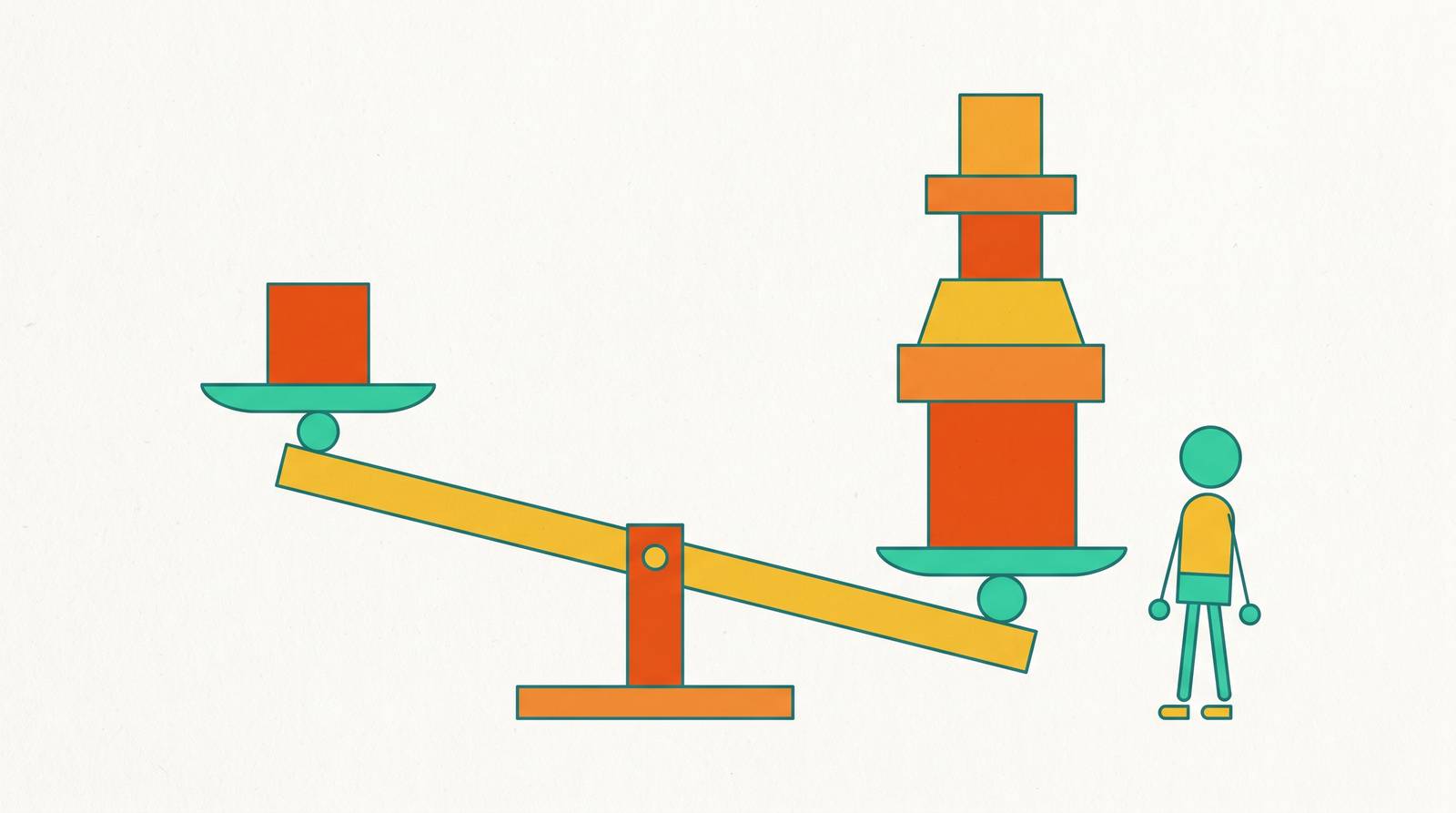
A full-time Creative Director looks like a $158,000 line on a hiring plan. Tack on benefits, recruiting fees, ramp time, and the odds of a bad hire, and you're closer to $250,000, before anyone accounts for what happens if the person doesn't work out. This piece walks through where that gap actually comes from, and how the fractional model closes it while still delivering the strategic output founders need.
Hiring plans get written by optimists, since nobody drafts a budget assuming the hire flops, so the instinct is to jot down base salary, pad it a touch, and call it done. It's a reasonable instinct, but it's also the exact way companies end up spending far more than planned on one seat.
The hidden costs that don't appear on any budget sheet
Start with the number founders actually check. Glassdoor puts average Creative Director base pay near $158,000, top quartile past $210,000. ZipRecruiter's July 2026 figure comes in lower, around $129,330. That's an $80,000 spread before anyone's signed anything, which tells you "the number" was never really one number.
Now stack on employer-side costs. The Bureau of Labor Statistics puts that at 28 to 35% above base as of 2025, covering FICA, health insurance, 401(k) match, paid leave. On a $158,000 base, add another $44,000 to $55,000 before the laptop's even open.
Recruiting piles on more. Search firms typically charge 15 to 25% of first-year salary, which on that same base runs $19,500 to $50,000 in fees alone. Go in-house instead, and cost-per-hire for a senior creative role still sits around $20,000 to $28,000. Add equipment and software licenses and onboarding (another $3,000 to $10,000), and geography tilts the scale further still. Robert Half's 2026 Salary Guide has the New York City midpoint at $181,886, high end near $221,813. San Jose trails close behind, topping out around $175,000 to $176,000.
Total it up and you're at $175,000 to $299,000-plus in year one, according to GTM8020's analysis, before the person has shipped a single asset. The salary line founders budget for is a floor, not a ceiling.
The ramp problem hasn't even entered the room yet. Most new creative directors need 90 to 120 days to hit full stride, so for roughly a third of the year, the company pays full salary for something closer to half the output. That cost never shows up on a spreadsheet; instead, it shows up as a campaign that slips or a launch date that quietly moves, and nobody traces it back to the hire that caused it.
Then there's mis-hire risk, the part that should actually keep a founder up at night. A bad hire happens roughly half the time within 18 months, and GTM8020 puts the damage at 30 to 150% of annual salary once you count lost productivity and running the search again. On a six-figure hire, that range compounds quickly on top of whatever already got spent in year one.
Creative mis-hires sting worse than most, because brand drift compounds. Six months of inconsistent direction doesn't vanish once the right person walks in, since someone has to go back and untangle everything that shipped in the meantime, and untangling is expensive in a way nobody can neatly itemize.
There's a rigidity problem too, baked right into the structure, since headcount is fixed cost. If creative needs shift six months post-hire, which they usually do, the cost structure sits there, unmoved. Robert Half projects only a 1.5% year-over-year salary bump for creative roles in 2026, so the market's cooling, but that doesn't touch the actual issue: fixed cost stays fixed no matter what the salary trend line does.
Add it up and the hidden costs outweigh the sticker price by a wide margin. The headline salary understates total risk by a factor of two or more, and most budget sheets never catch it.
What fractional creative leadership actually is, and what it is not
A fractional creative director is a senior creative leader who owns strategic direction on a part-time, ongoing basis. It's a simple definition, though the word "fractional" just makes people picture something smaller than it is, which is the whole problem.
Draw the line against the two roles people confuse it with. A consultant delivers a strategy deck, cashes the check, and exits, diagnosing the brand once before walking away. A fractional creative director stays inside the team week after week, accountable for how the work turns out as the brand evolves over time.
Freelance comparison misses just as badly. Freelance work is project-based and transactional; a fractional engagement runs ongoing, and the hours flex with actual need, full pace during a launch, lighter during steady-state weeks. It breathes with the business instead of billing by the asset.
Week to week, the job tends to break down like this. Brand stewardship (reviewing work against the standard, catching drift before it hardens into habit) eats up roughly 30% of a fractional CD's time, according to research from callthedesignguy.com. The rest goes to writing or sharpening creative guidelines, briefing designers, making the on-brand or off-brand calls a team without senior oversight tends to just... punt on. Think of the role as filter and source at once: filtering out what doesn't fit, supplying direction for what does.
Before hiring either model, ask the question people skip more than they should: is the bottleneck direction, or is it production? Inconsistent work, work that just doesn't land right, that's a direction problem, and a fractional CD fixes it. Can't produce enough volume to keep up with demand? Adding direction on top solves nothing, since you just get a well-directed backlog. And if there's no designer, no brand assets, no production setup at all, the first hire needs to build that foundation, not direct a team that doesn't exist yet.
Fractional isn't the right fit everywhere. Large teams needing daily people management, creative functions being rebuilt from scratch, workflows that depend on constant real-time collaboration, those need someone embedded full-time, with the institutional memory that only comes from showing up every single day.
The actual price of fractional creative leadership and how the math compares
Fractional pricing splits into three tiers, based on 2026 data from GTM8020. Tier 1, roughly one day a week, runs $5,000 to $7,000 a month, about $60,000 annualized. Tier 2, two to three days a week, runs $8,000 to $15,000 a month, or $96,000 to $180,000 a year. Tier 3, three-plus days or close to full-time, starts at $15,000 a month, north of $180,000 annually.
Most lean teams land in Tier 1 or Tier 2, because most lean teams genuinely need 10 to 20 hours a week of senior direction, not 40. That's the whole math once you strip the noise out.
Fractional costs more per hour than a salaried employee, and there's no use pretending otherwise. The value shows up in right-sizing the commitment instead: if the real need is 15 hours a week, paying for 40 is money spent on nothing, dressed up as job security.
Fractional also sidesteps every cost that inflated the full-time number earlier, since there's no recruiting fee, no 90-to-120-day ramp, no benefits burden, no mis-hire liability sitting on the balance sheet. GTM8020 puts total savings at 40 to 65% compared to full-time, on a total-cost basis. Speed compounds it further: recruiting a full-time Creative Director takes months, from job post to first day. A fractional engagement can start within days, producing output from week one instead of month four.
Worth separating fractional from freelance once more, because people lump them together constantly. Freelance creative directors often charge $150 an hour or more for project work, but availability is inconsistent by design, a poor match for ongoing strategic leadership. Fractional is built for continuity across an extended engagement, a different rhythm than one-off delivery.
Why brand consistency — the core deliverable of creative leadership — is a financial outcome, not an aesthetic one
Research on brand consistency has repeatedly tied it to measurable revenue outcomes, with the underlying mechanism traced to better recognition, more trust, and less friction at the point of purchase. Even discounting any single study heavily, the direction holds: consistency moves revenue, alongside aesthetics.
That reframes the whole thing, since consistency sits next to pricing and distribution as a competitive metric, worth tracking on its own terms.
Here's where lean teams trip without meaning to. As more people produce materials across more channels, consistency erodes, not through anyone's fault exactly, but through plain entropy, nobody owning the standard. Everyone assumes someone else is watching the brand guidelines, and usually nobody is.
That's the exact gap a fractional creative director's core job fills: reviewing the work against the standard, catching the drift before it calcifies into "well, that's just how we do things now." It's a small, unglamorous mechanism, but it's precisely what stops the kind of revenue erosion the Lucidpress and NielsenIQ numbers point toward.
There's a newer wrinkle. As AI-generated responses increasingly surface brand mentions from third-party pages rather than a company's own website, the brand standard has to hold across channels the company doesn't control directly, which raises the bar rather than lowering it. The standard has to travel beyond the site a company actually owns.
Put those two findings side by side and the hiring decision gets a lot clearer. Consistent senior oversight, delivered every single week, is worth more dollar for dollar than an intense 90-day burst that leaves the standard to organizational memory afterward, since memory fades, and standards, left untended, fade right along with it.
The conditions that make fractional creative leadership the more rational choice for fast-moving companies
Fractional fits a specific set of conditions, and those conditions deserve to be named plainly rather than treated as some universal answer.
It fits when the company already has production capacity (designers, tools, existing brand assets) but lacks the direction to make it all cohere. Work is shipping, but it just doesn't feel like it's coming from one brand. It also fits when creative needs are real but haven't hit the volume or complexity that justifies a full 40 hours of senior leadership. Speed matters here too, since a fractional hire can start directing work almost immediately and skip the 90-to-120-day ramp that slows down even a successful full-time hire. Fixed headcount is itself a risk in these cases, especially for early-stage companies whose creative needs will likely look nothing like this in a year.
The demand data backs it up, and it's not subtle. Searches for "fractional creative director" on LinkedIn rose more than 300% between 2021 and 2024. GTM8020 reports demand for fractional creative roles broadly grew more than 400% since 2022. Averi.ai's analysis found a large share of startups now lean on fractional marketing leadership to drive strategy while keeping fixed costs down, a deliberate operating choice made by a meaningful portion of the market.
Full-time still wins under the right conditions, worth stating plainly instead of hedging around it. A team large enough to need daily, hands-on people management calls for full-time, as does a creative function getting rebuilt from scratch. A company whose creative complexity genuinely demands someone embedded every day, carrying institutional context nobody else has, calls for full-time too.
The real question is structural: whether the shape of the actual creative need matches a full-time cost structure, or whether it's being jammed into one out of habit.